12 January 2026
Eat your porridge and go dancing: The life of Elsie Dalzell
Growing up, daughter Lyn said her mum, Elsie, was hesitant to speak about her military time, preferring instead to focus on the generation before her.
“We knew more about mum’s uncles who served in World War I. All I can remember is that mum had a big great coat from her time in service, which got a lot of use out in Chinchilla on the farm. But mum never talked about it,” Lyn says.
Eyes on the sky
In 1942, Elsie applied to enlist in the Australian Women’s Army Service (AWAS). Just shy of 21 – the enlistment age at the time – she needed her mum’s signature on the application.
“You read in the papers that they’re wanting more girls and so forth. I asked mum, ‘Could I please?’,” Elsie says.
“I just thought things were getting that bad at the time that I wanted to help,” she told Noosa Today’s Margie Maccoll in a 2020 interview.
Her application was accepted, and just six months later, Elsie left the family farm for the first time, travelling to Brisbane and then onto New South Wales for training at Kapooka.
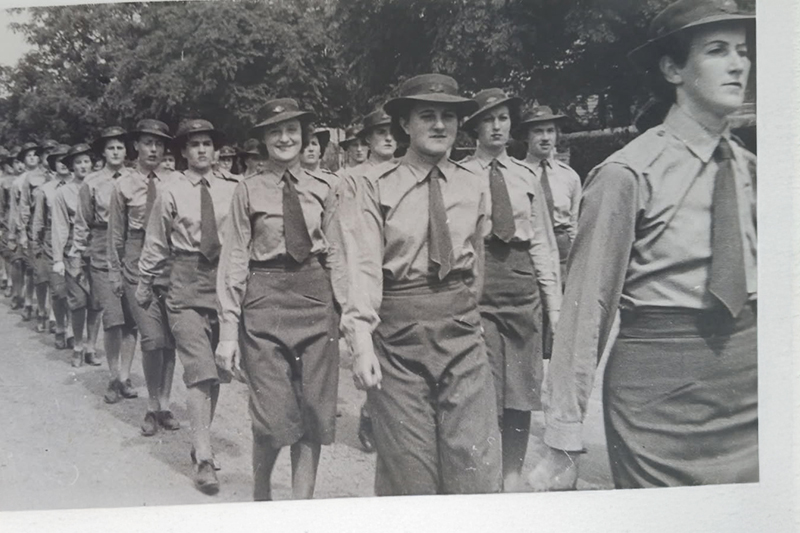
As one of the first female units to train at the camp, a separate section was allotted to the AWAS, with troops taking up residence in tents on a paddock.
While training, the unit shared rations of canned meat, powdered eggs and peas, buoyed by the occasional ice cream to remind them of the comforts of home.
In March 1943, Elsie returned to Brisbane and was assigned to the 56th Searchlight Battery, Royal Australian Engineers.
She took part in staging at Enoggera Barracks before ultimately joining the 79th Searchlight Battery later that year in Townsville.
“I worked in the operations room. The team was comprised of four people – two plotters, one recorder, and one telephonist – me,” Elsie says.
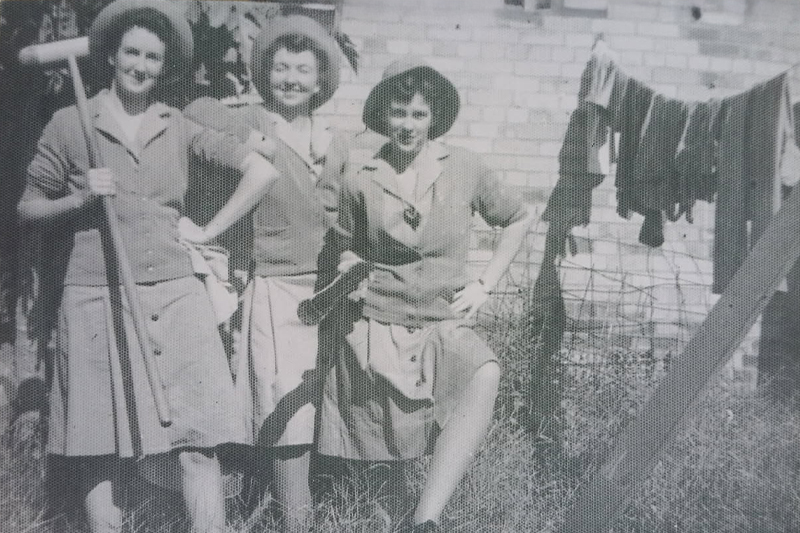
The 79th Searchlight Battery stayed in tents at Pallarenda Beach, taking shifts watching the skies to alert the base of any danger.
During her time in the unit, Elsie studied to identify potential threats and formed a lifelong friendship with fellow troop member Daisy.
Reflecting on the friendship between her mum and Daisy, Lyn says they were like chalk and cheese.
“They called mum ‘Silence', whereas Daisy was a lot more outgoing. It’s been lovely to look through the old letters between them to see the early days of their friendship and learn more about their time with the unit. We always called her Aunty Daisy,” Lyn says.
Peace at last
In 1944, the Searchlight unit was disbanded, followed closely by the end of World War II.
When peace was declared, Elsie fondly remembers "dancing the Laconga up the main street of Southport”.
“It was an exciting time for all of us,” she says.
Her military career continued after the Searchlights, serving as a switchboard operator in military intelligence schools across Southport, Beenleigh and Cabarlah.
Returning home
Elsie was discharged on 26 January 1946 and returned home to the family farm located 30km out of Chinchilla.
Reflecting on the transition from service to civilian life, she says with her trademark wry wit, “I don’t know that it had much effect on me.”
Using her finely tuned skills, Elsie quickly embraced the family business, helping to work the farm and operate the Beruna switchboard alongside her mother.
Lyn, who grew up watching her mum and grandmother deftly manage and transfer calls, couldn’t wait to join the fold.
“I used to be really buzzed when I was allowed to work it myself.”
It wasn’t until the 1980s, when Elsie and her husband Eric moved into Chinchilla, that she connected with the local RSL Sub Branch.
Elsie says joining the RSL felt like “being part of the gang”.
In her early years, she took part in Women’s Auxiliary activities, and as her mobility changed, the Sub Branch organised a mobility scooter so she could remain involved.
Since moving to be closer to her daughter Lyn, Elsie has joined Cooroy-Pomona RSL Sub Branch and now receives weekly calls from senior member John Diprose.
“Mum’s days of contributing are over, but now it’s nice that she’s on the receiving end," Lyn says.
The next generation
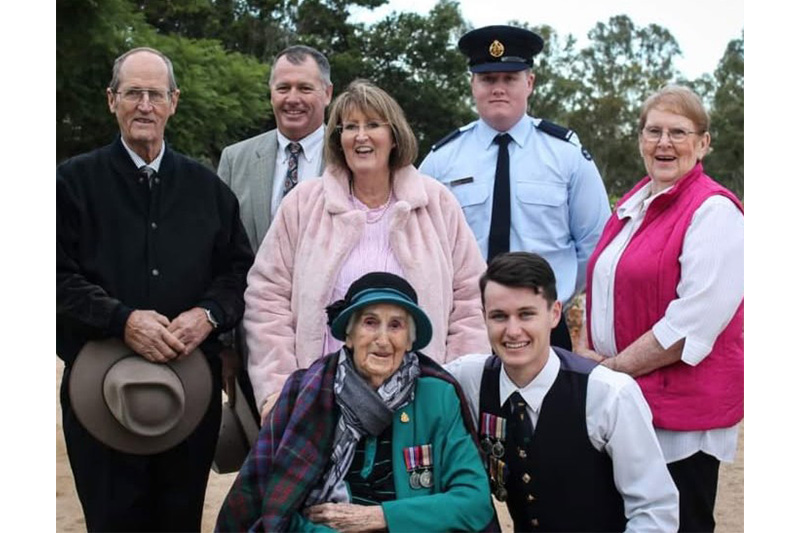
In February 2026, Elsie will attend the Royal Edinburgh Military Tattoo in Brisbane with her family, including her great grandsons, brothers Luke and Nic McGahan.
She is especially looking forward to seeing Nic play in the pipe band.
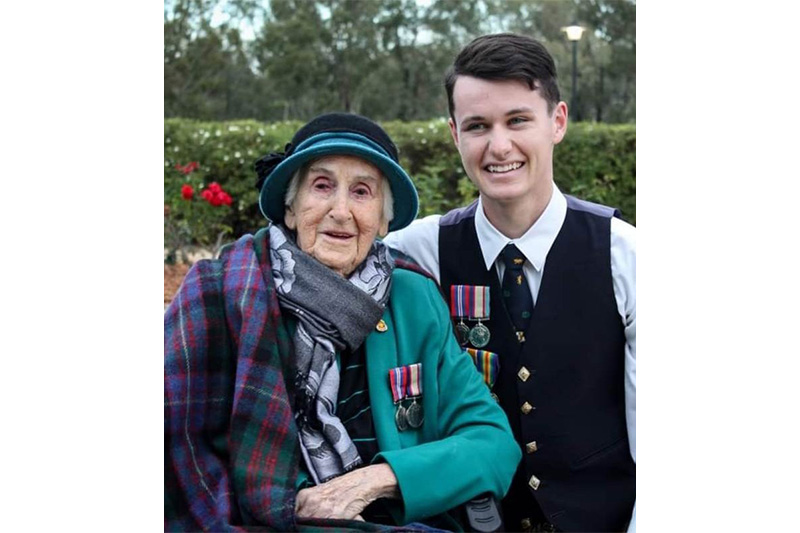
“It is such an honour to be able to play at the Tattoo in Brisbane and know that my Great Nanna is finally able to see me play live - not just on TV. Every time Great Nanna hears I am coming to visit, the first thing she asks is if I can bring my bagpipes just to give her a little private recital,” great grandson, Nic says.
“Great Nanna is one of the main reasons I started playing bagpipes in the first place. She loved coming to watch my brother and I play when we were at school. Over the past four years I have played at the World Pipe Band Championships as well as The Royal Edinburgh Military Tattoo, but travelling to the UK is a bit far for her now. However, since the show is coming to Brisbane, it means she can now see how far I’ve come and watch the Tattoo live for the first time.”
Elsie’s great grandsons have proudly carried on her legacy, wearing family medals at Warwick Scots PGC College ANZAC Day ceremonies, and in Luke’s case, pursuing a military career himself.
“I think Great Nanna’s experience subconsciously influenced my career path. It made me want to serve and honour our family legacy,” Luke (Leading Aircraftman) says.
“I distinctly remember, my first Christmas seeing her after joining Defence six years ago. She asked for my service number. Without missing a beat, she rattled hers off like it was yesterday. I was extremely impressed.”
“Knowing that we are going to the Tattoo as a family is an incredible feeling and a memory I will cherish for a very long time to come.”