
04 August 2026
Never serve alone
Where it all began
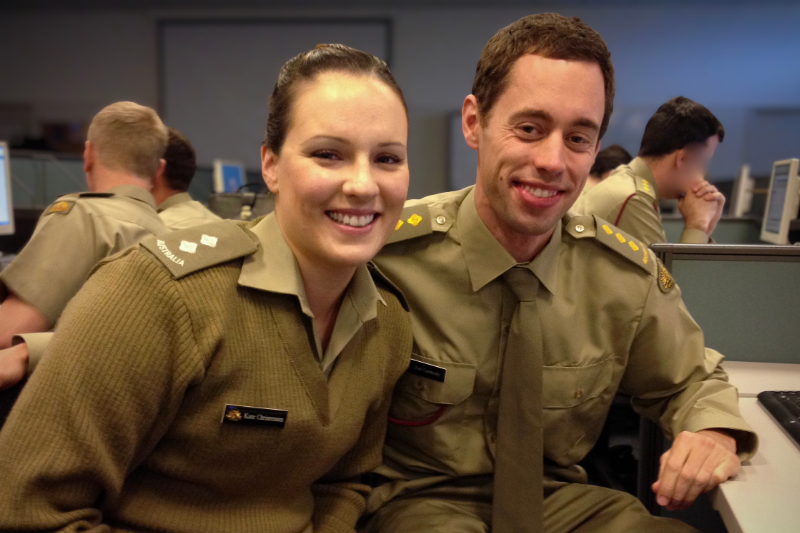
In 2013, Kate Christensen and Joel Carmody were commissioned into the Long-Term Schooling Program with the Australian Army. Eager to complete their respective degrees with Defence, Kate embarked on a nursing degree at Griffith University, while Joel undertook a medicine degree with the University of Sydney.
"It was as an opportunity for us to challenge ourselves, build meaningful careers, and contribute to something bigger than ourselves," Kate says of their fledging military careers.
After graduation, they were both posted to Robertson Barracks in Darwin where Joel served as a Medical Officer, and Kate served as a Nursing Officer.
Living on Barracks, far away from home, meant the group of new officers soon became close. “We bonded over ironing ‘poly’s’, long pack marches, fumbling through the shooting range, time out in the bush on Exercise, working in Robertson Barracks Garrison medical centre, and doing regular Basic Fitness Assessments (BFAs)," Kate says.
"I couldn't help but notice Joel! He was the fittest doctor around and would often smoke the non-commissioned officers in the BFAs!"
Joel's first impressions of Kate also point to an instant attraction. "When we all met on the first day, I had a hard time looking away from Lieutenant Christensen's smile," he recalls.
Love is a battlefield
Despite the excitement of their newfound romance, life on base also had its fair share of challenges.
“For both of us, the biggest adjustment was moving to Darwin for our first posting. We were a long way from home and our usual support networks, and suddenly we were learning how to be Army officers, clinicians and soldiers all at the same time. There were plenty of moments where we felt out of our depth," Kate reflects.
Looking back, Joel says it was the steady presence of their families and friends that helped them find their feet during those early years.
"They may not have always understood exactly what we were doing, but they never stopped supporting us – whether it was phone calls, care packages, visits to Darwin or simply cheering us on from afar," he says.
Kate recalls one specific moment during Exercise Hamel Sabre in 2014 when family kept her going.
"When we finally got reception again, I remember feeling overwhelmed at the prospect of being able to call my family again. Something as simple as hearing a familiar voice suddenly felt like a luxury," she remembers.
"I would often sit in the Role 1 resus tent at the end of the day and watch soldiers climb to the highest points in the training area just to get a few bars of reception and call home. Ringing their partners, their kids, parents. As darkness fell, the ridgelines would light up with tiny lights from their phone screens."
It’s this support that sustained Kate and Joel as they faced one of the toughest moments of their relationship.
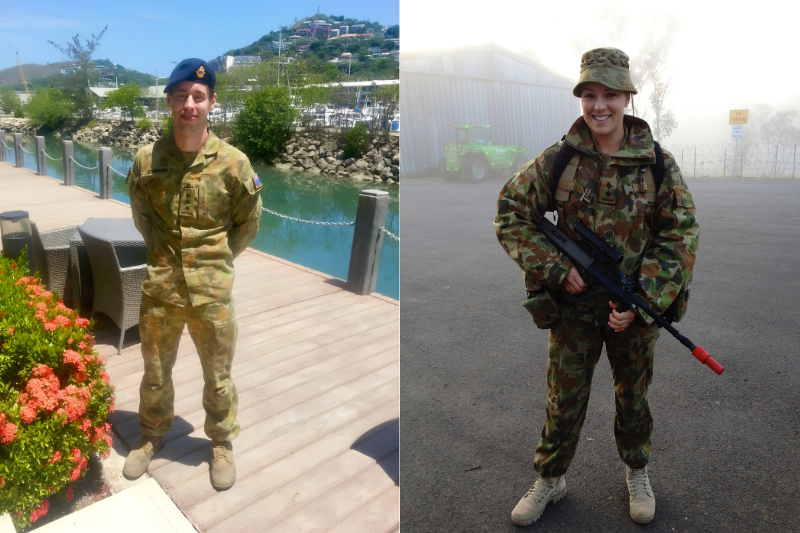
In 2015, shortly after they relocated from Darwin to Enoggera Barracks in Brisbane, Joel deployed to Iraq with Task Group Taji 1 as part of Operation OKRA, while Kate grappled with a career-ending hip injury and a return to civilian life.
"Like many Defence partners, you hang onto every phone call, email or message. You learn to trust that no news is good news. I took it one day at a time and counted down the sleeps until he was finally home," Kate says.
Defence families serve too
Just as they had during their early career, Kate and Joel continued to rely on eachother, and their support network, to navigate the isolation, anxiety and distance of deployment.
"Kate had a tradition of hiding letters in my duffle bags prior to deployments or exercises. It was a welcome surprise to discover these days or weeks later, particularly when the tasks and days were mentally challenging and isolating. It reminded me that I had family and loved ones waiting for me to safely return," Joel remembers.
Back home, their family and friends rallied to take care of Kate as she underwent surgery, only one day after Joel had deployed.
“It was a lonely feeling not having Joel there, but I remember waking up to my stepdad sitting at my bedside, and when I was discharged and went back home, Joel’s siblings had sent me flowers,” Kate says.
“It took weeks before I finally heard from Joel, due to limited contact. My Army Nurse friends were such a lifeline during his deployment and my rehabilitation. I leaned on them and my family a lot during that challenging chapter.
"Military service is rarely an individual achievement. I think that's something Defence families understand better than anyone – the person in uniform serves, but their family serves alongside them."
Bonds that last a lifetime
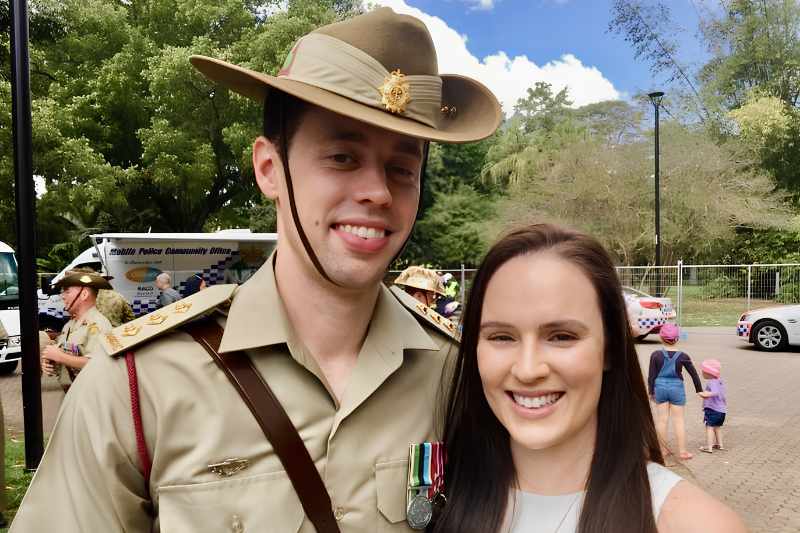
When Joel finally returned from deployment, the couple stepped into a new chapter together – first saying ‘I do’, before transitioning into civilian healthcare roles, and becoming parents themselves.
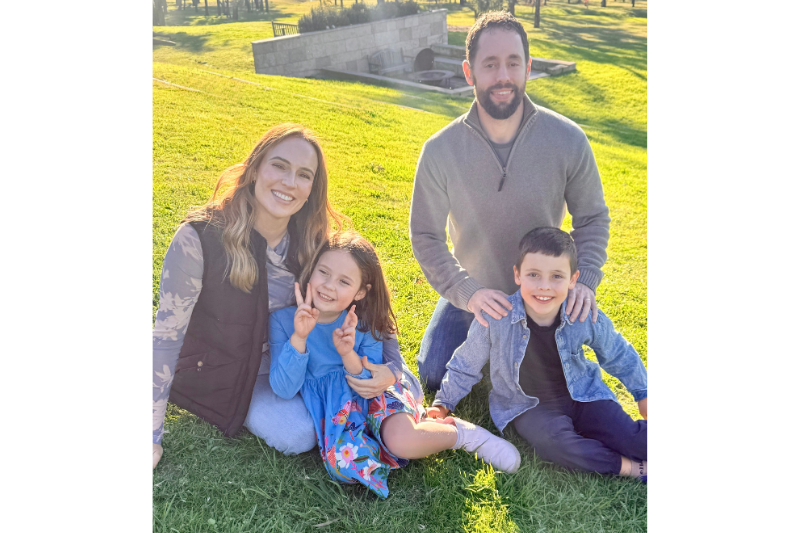
Though their time in uniform is now over, Kate and Joel are still thankful for the experience and the support network they have built – both at home and with their “family in green” – including their fellow veterans at Southport RSL Sub Branch, where they are now members.
"We are incredibly proud of our service, but even more grateful for the family, friends and mates who carried part of that load with us. We may have worn the uniform, but we certainly never served alone," Kate says.
“Their support helped shape who we are today, and now our focus is on passing those same values of service, sacrifice, resilience and looking after others on to our children and the community we serve.”
The families of our veterans serve too: Recognising Families Sculpture
The Recognising Families Sculpture embodies the enduring strength of all who persevere under the weight of absence. The families, parents, partners, and children who serve without salute, standing resolutely beside their loved one in service.
When their veteran steps up, so too do their families in the love they show, the support they give, the hope they hold, and the quiet sacrifice they make to ensure the continuity of home life.
A sculpture to families at the Australian War Memorial would finally give form to their enduring resolve and love for their veteran. We invite you now to support the final step of this journey.