
18 August 2026
Is volunteering the secret to longevity? Florence Drury is living proof
Like so many of her male friends who had already enlisted, Florence was drawn by the promise of purpose, friendship and a new kind of wartime work. But with the loss of her close friend, Len, still fresh, she also understood the very real cost of service.
"I think it brought home the fact that any of them could not have come back. Most of them did fortunately, but Len didn't. He was only 21," she remembers.
In a time when the military was a male-dominated field, Florence was amongst the first generation of women to join the Defence Force. With so many men deployed overseas, women quickly began to rise through the ranks.
"We were the first. Over time, women did magnificent things – they worked with parachutes and aircraft and all that type of thing. Vocations that they probably would never, ever have done had it not been for the war."
Florence enlisted in the Air Force as a telegraphist, undergoing training in wireless technology before being posted to North Eastern Area Headquarters in Townsville in 1942.
"I did my rookies at Ascotvale, Victoria, then a six-month course learning the Morse code alphabet and how to work a Morse key," she remembers.
When Florence graduated, she was awarded her "sparks" – a badge that represented the authority of a wireless operator to approach an officer directly – and the title of ACW Telegraphist.
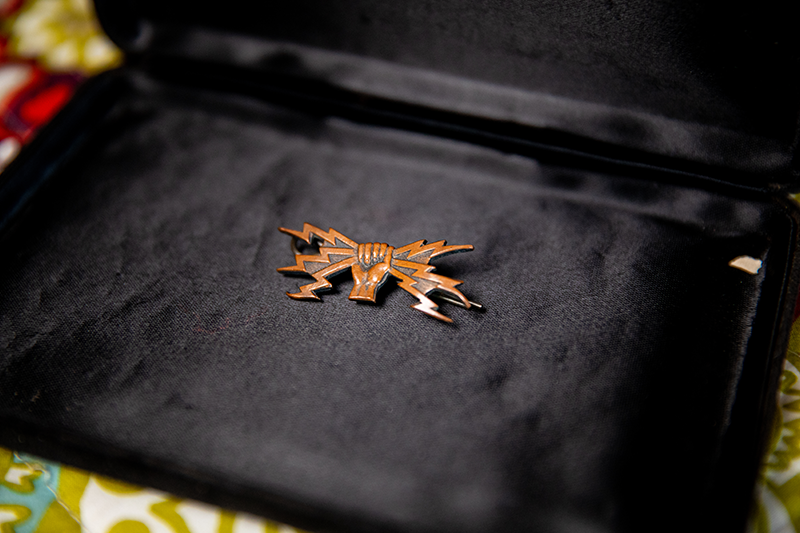
Florence was awarded her “sparks” badge after completing a telegraphist course with the Royal Australian Air Force.
The Townsville Telegraphists
Florence describes Townsville as a sleepy little town with a fledgling Defence community – a far cry from the garrison city it is today.
She recalls arriving at the local Catholic boarding school, St Patricks, where she would spend the next three years living in the nuns’ quarters amongst her fellow telegraphists.
When on shift, they would don their summer uniform in the Townsville heat and head to base. At times they were posted further north, or inland to Charters Towers, to ensure all bases were monitored around the clock.
"The telegraphist would receive the code then take it the SIGS office where it was decoded – for senior eyes only. A lot of work we did focussed on weather reports – sometimes at 3.00am," she says.
Florence downplays her time in the Air Force, but she does recall one event that has stayed with her after all these years.
"I remember being on shift the night that Hitler died. It was roughly midnight when we received the news and everybody yelled! Then, it was straight back to work."
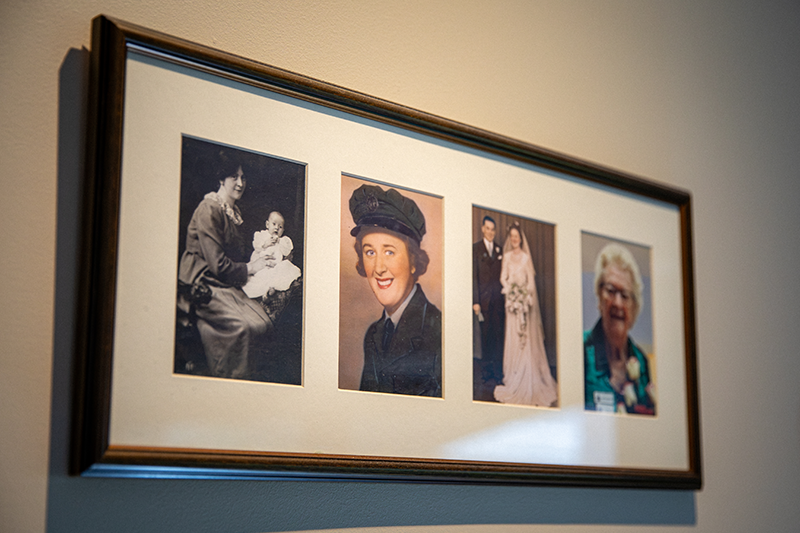
Serving the community
In January 1946, Florence was demobilised and returned to civilian life to take up a job as a fashion buyer at Farmer's Department Store in Sydney.
She married member of the Australian Imperial Force, John Drury in 1948 and went on to have two daughters. Though she had left Defence, her life of service continued.
Florence became heavily involved in community groups including Southport RSL Sub Branch (where she is a Life Subscriber), Probus, and the Soroptimist Club.
"I think volunteering is important to me because I am very much aware of the needs of people. I was brought up in a good Christian home during the Depression, and I saw then how important it was for people to help each other,” she says.
"To me, it's been a way of life. And I have met so many wonderful people. I'm sure that there's many people that I've been able to help – I hope to goodness that I have helped. It's been something that I've liked doing."
In honour of her years of community service, Florence was awarded the Medal of the Order of Australia (OAM) in the General Division in 2026.
"It was the biggest shock of my life. I was very humbled," she reflects.
"I thought, well, I never did that for an award. If you do it properly, you do it to help your fellow man. I hope that along the years of my life, I've helped my fellow man.
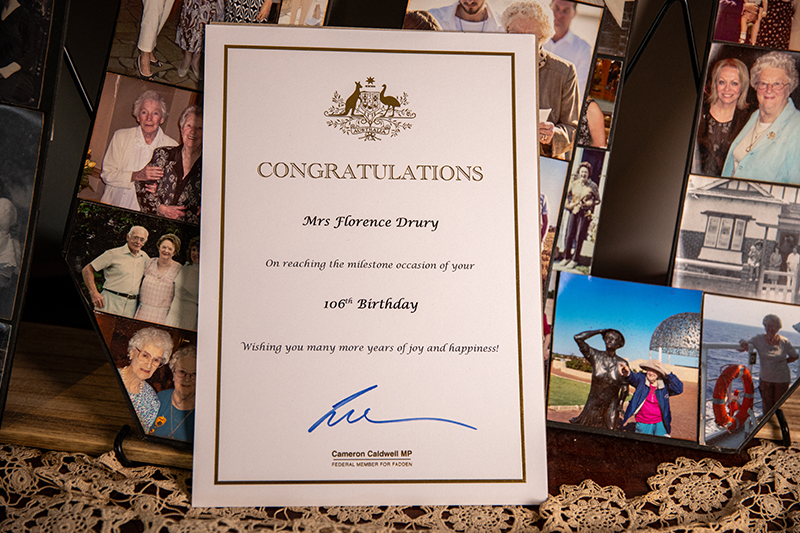
At 106 years old, Florence continues to stay involved in her community, albeit remotely, and still religiously reads the newspaper every morning.
She credits her longevity to living with purpose and gratitude and always lending a helping hand.