
10 August 2026
Darryl Shipp's brush with death, and life of service
A "regular” 9-5 job was never on the cards for Darryl Shipp. He quit school and began driving trucks before he was even old enough to hold a license. Most days, he’d work from sunrise to midnight, travelling the bustling streets of Brisbane to deliver fruit and veggies to restaurants across the city.
Many assumed he was being primed to take over his dad’s trucking business, but Darryl had other plans.
At 15, he was accepted as a Navy Apprentice, intent on following in his father's footsteps who had served in WWII. Just two days out from being shipped to Leeuwin Barracks in Western Australia, Darryl had a change of heart, fearing his sea sickness might get the best of him.
Instead, he continued to drive trucks for his father's business, until he turned 17 and enlisted in the Royal Australian Air Force.
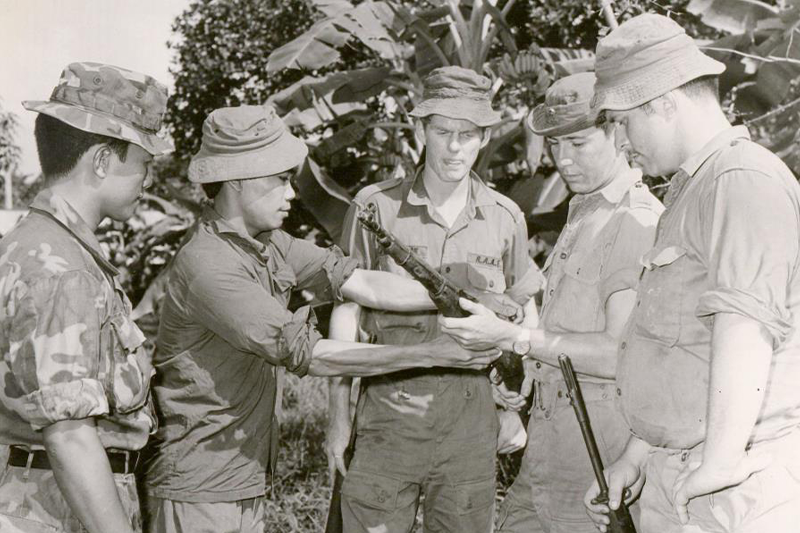
Darryl joined as an Airfield Defence Guard and spent two years training, including stints with Army units such as Charlie Company, 4RAR, until he was of age to go to Vietnam.
"I wanted to go to Vietnam because I believed in what was going on at the time. That's what I wanted and I never looked back," he says.
On 10 June 1970, Darryl touched down in Vietnam.
An unexpected beginning
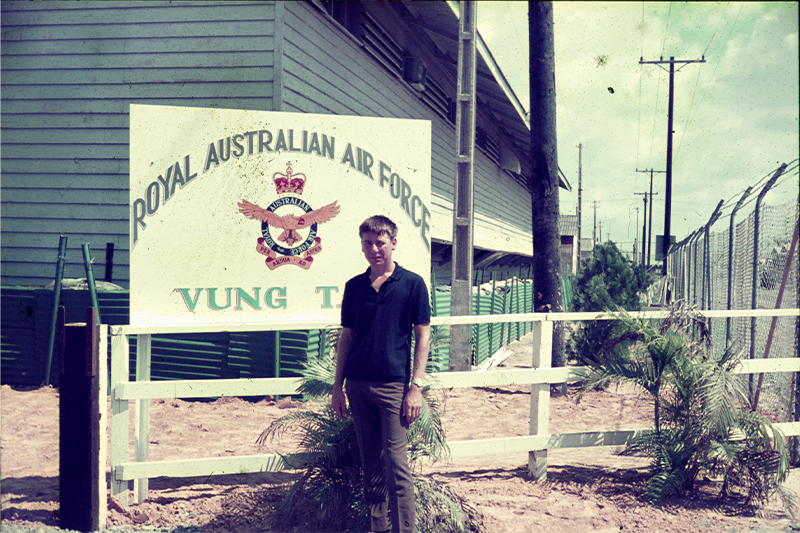
Fresh off the plane, after a big night of celebrations with his rugby mates in Brisbane, Darryl was put on guard duty on the main gate at Vung Tau base.
As he stood in the sweltering heat, he recalls feeling a little under the weather – thinking his climbing temperature and swimming head was the result of a bad hangover.
The next thing he remembers was waking up in hospital.
"I'd collapsed on duty, and they'd rushed me to the Army hospital. I came to and said, 'What the hell happened', and the doctor replied, 'You're running a temperature well over 100 and you've got glandular fever, so you're stuck here.'"
For Darryl, who’d already spent years waiting and preparing for his first days in Vietnam, the sickness was a big blow to his psyche.
"I was a young person who had come to Vietnam to fight for his country, so laying in a hospital bed for 4 weeks was a killer," he says.
Back from the dead
When Darryl was released from hospital, he was assigned to the Quick Reaction Force.
"My commander said, 'Oh, you'll be safe there. Other than the occasional rocket, we haven't been attacked for months.' Lo and behold, the second night I was on shift, we got attacked with grenades at the fenceline."
Joining his fellow troops, Darryl rushed to sweep the area for enemy threats. In the pitch black, he waded through murky waist high water with mud and knots of thick reeds at his feet. He was still weak from his illness and struggled to keep his head above water as it grew deeper and deeper.
All it took was for one reed to wrap around his canteen, and he was gone.
"I just disappeared underwater and it all went black. I couldn't touch the bottom, I couldn't get up and I couldn't get down. It was just lucky that a guy on my left flank saw me disappear. He searched desperately through the water until he grabbed hold of my rifle and yanked me out," Darryl says.
"When they pulled me out, I was dead and I didn't wake up until I was in the back of a Land Rover being rushed to hospital. When I woke up, I screamed, 'Get off me, you're breaking my ribs!' The doctor said I was clinically dead and my mate had bought me back to life.
"I still don't know how long I was dead for, but I had sore ribs for a month!"
Not long after, Darryl had another near miss on duty.
While investigating a fire that had broken out near base, Darryl was hit by an exploding grenade.
"At first I thought I was walking towards a flare, but I quickly found out, it was something much more," he remembers.
"Everybody thought I was dead. I had a concussion and blood running out of my ears. Everyone was yelling but I couldn't hear anything. I couldn't feel anything. My body was totally numb."
To commemorate his brush with death, his Commanding Officer and the Provost Marshall presented Darryl with the remains of the grenade that had injured him, and the shrapnel recovered from his chest – just below his heart.
"When you're young like that, it doesn't bother you. I just kept going. I felt invincible over there."
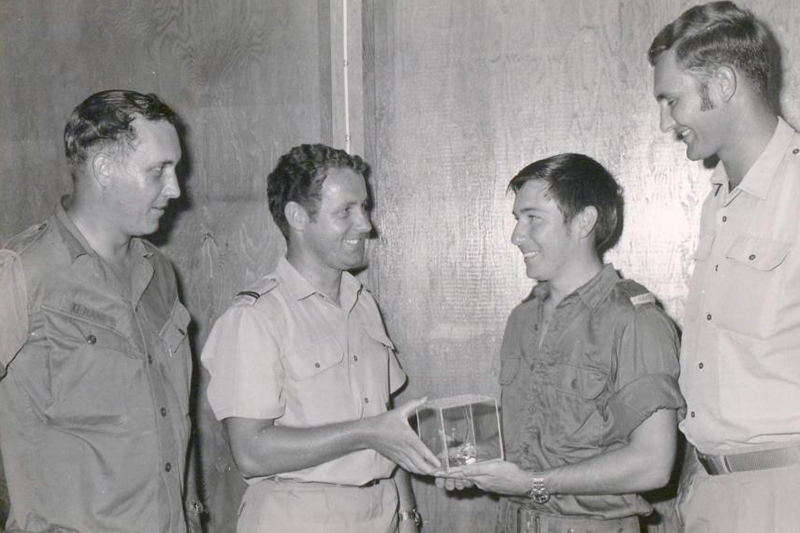
Darryl (second right), pictured with his Commanding Officer and the Provost Marshall, holding a box of shrapnel that was extracted from his chest after a grenade explosion.
Homecoming
In June 1971, Darryl's deployment in Vietnam came to an end.
The Air Force had already been notified that 9 Squadron in Vung Tau were pulling out of Vietnam, so Darryl put his hand up to stay a little longer and help with the transition.
"When I volunteered, my Commanding Officer just turned to me and said, ‘Skippy, you've cost me so much paperwork already. You're getting on that plane now! I'm not letting you stay.’"
Adjusting to life back home was challenging at first and made even more difficult by shifting political views at the time.
"When we came home from Vietnam, we didn't get the same warm welcome that troops did in WWI and WWII. It was a pretty hollow feeling," he says.
Over time, Darryl found solace in connection and learning – something that continued even after he left Defence and forged a career in veteran advocacy.
A proud veteran
Darryl's work in the veteran space began almost 40 years ago when he was living in the small country town of Biloela. As a member of the local RSL Sub Branch, and the then emerging Vietnam Veterans Association, Darryl had come to know many of the local veterans and saw the need for advocacy and counselling support.
"I had been through my own health challenges after service and wanted to help others, so I became a certified counsellor, and undertook advocacy training with DVA," he says.
“I had a permanent table in one of the coffee shops – that was my office. Any time a veteran was in strife, I’d say, ‘Meet me at that table – I'm on my way.’"
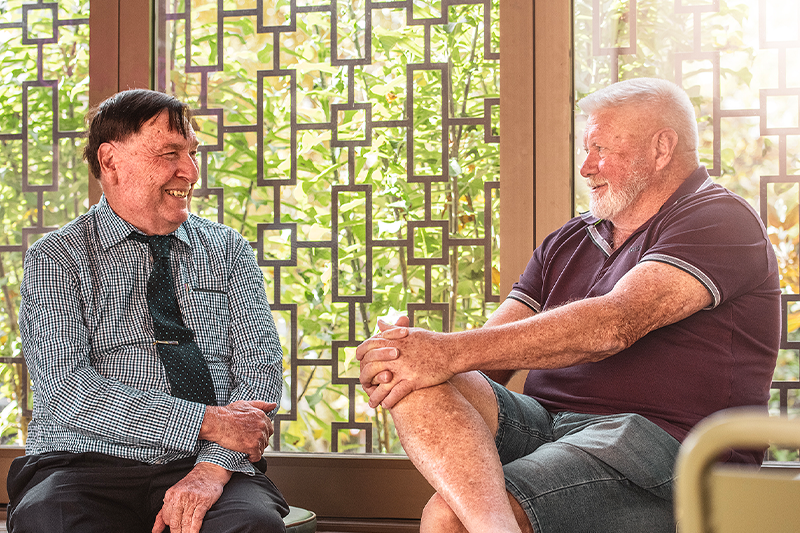
Now, Darryl continues to support veterans through his role as Secretary of the Vietnam Veterans Association – a position he has held for 15 years – member of Caboolture RSL Sub Branch, State President of the Australian Federation of Totally and Permanently Incapacitated Ex-Servicemen and Women (Queensland Branch) Incorporated, and organiser of the annual Vietnams Veterans' Remembrance Service in Brisbane.
On the 60th anniversary of the Battle of Long Tan, Darryl is reminded of the sacrifice of his brothers in arms. Even at 75 years old, he remains a warrior at heart.
"It's important to me that we remember those who served in Vietnam, whether it be in the Battle of Long Tan or the Battle of Coral-Balmoral," Darryl says.
"I volunteered to go to Vietnam to defend our way of life, and I'd do it again at a drop of a hat. Even now, if they asked me to go, I'd go."
Vietnam Veterans’ Day
More than 60,000 Australians served in Vietnam from 1962 to 1973, with some returning for humanitarian operations in 1975.
Sadly, 523 died, some 3,000 were evacuated with wounds, injuries or illnesses, and – amidst strong community opposition to the war – many who returned home were not treated with the respect and honour they deserved.
Vietnam Veterans’ Day is a chance for us all to recognise the service and sacrifice of Vietnam veterans – a legacy that many have continued out of uniform as dedicated community leaders and volunteers.
This year marks the 60th anniversary of the Battle of Long Tan. Join us in honouring Australia’s Vietnam veterans on 18 August 2026.